 Are you looking for a solution for your industry or do you have a technical problem that needs solving?


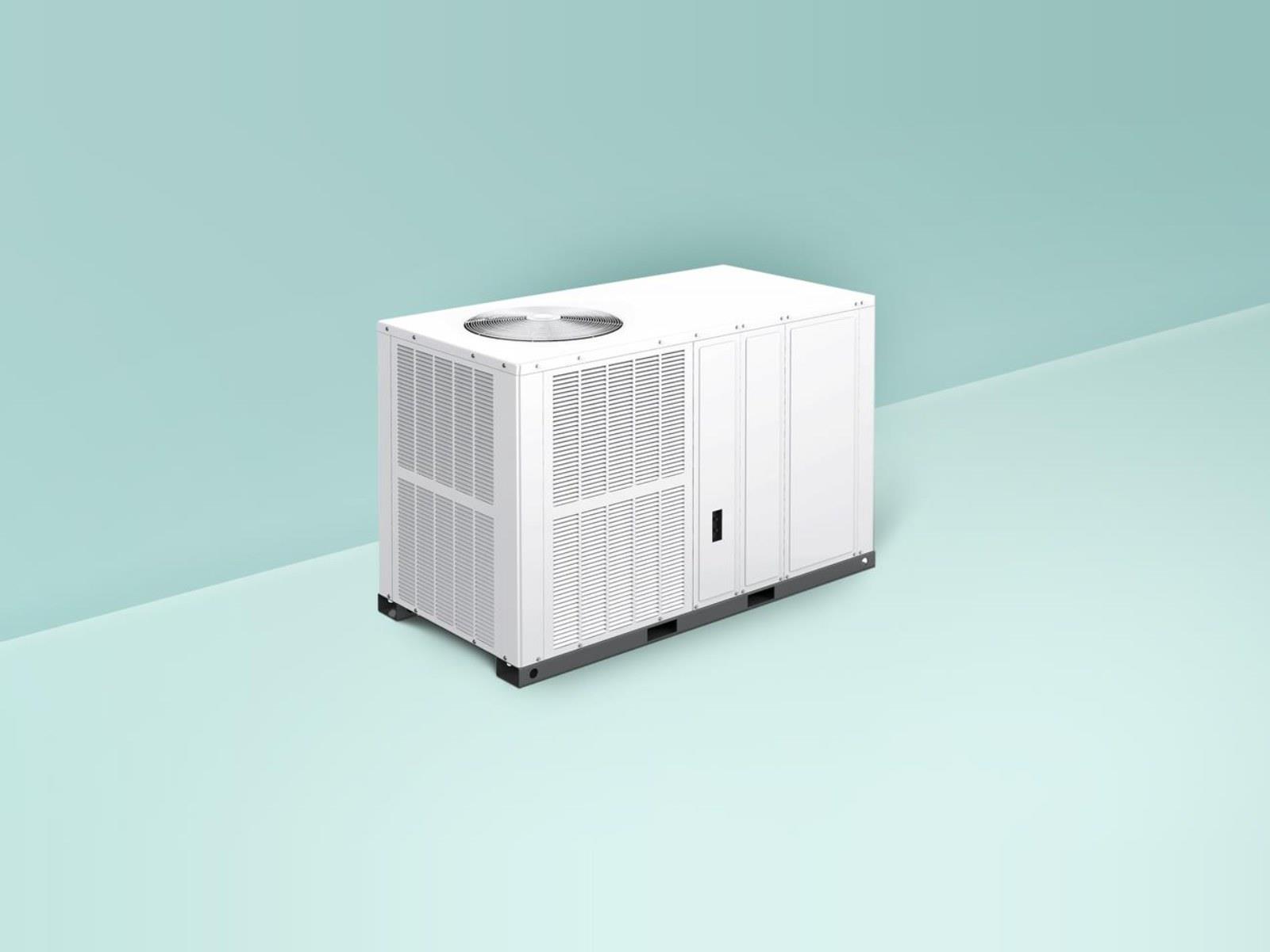
For ESB Rijeka, MB Frigo Grupa delivered: Clivet heat pumps (2 units) and Sabiana fan coils. Total capacity: 600 kW.
About the project: ESB Rijeka
Office buildings with many offices and meeting rooms need a system that provides both heating and cooling from one source and separate control of each space. Two heat pumps share the total capacity of 600 kW, so the building stays supplied even while one unit is being serviced.
Solution: Clivet water chillers and hydronic system
In a hydronic system with Clivet water chillers, a central unit (a chiller, or a heat pump in reversible versions) produces chilled or hot water, which is piped to fan coils and cassette units in the individual spaces. The refrigerant stays in the outdoor unit and only water enters the building.
What this means for designers and investors:
- Safety for occupants – no refrigerant is distributed through the rooms, an advantage in public, educational and healthcare buildings.
- Flexibility – terminal units are selected according to the use and acoustic requirements of each space.
- Easy extension and renovation – the hydronic network can be extended without work on the refrigerant circuit.
- Integration with building management – system operation is monitored and optimised via the BMS.
Solution: fan coils and cassette units
Fan coils and cassette units are the terminal units of a hydronic system: chilled or hot water from a central source flows through their heat exchanger, and a fan distributes the air into the room. Each room has its own control.
What this means for designers and investors:
- Individual control – every classroom, office or room is set separately.
- Quiet operation – units selected according to the acoustic requirements of the space.
- No refrigerant in the room – only water flows through the units.
- Easy replacement – existing pipework can often be reused during renovation.
Why MB Frigo Grupa
Clivet is an Italian specialist in cooling, heating and air-treatment systems. MB Frigo Grupa has been active in air conditioning and refrigeration since 1981. For air-conditioning projects it provides technical support for designers in selecting and sizing systems, equipment supply, and support with commissioning, service and maintenance.
Frequently asked questions
Why two heat pumps instead of one larger unit?
Splitting capacity between two units provides redundancy in case of a fault or servicing, and better efficiency at part load, which prevails in office buildings for most of the year.
What is the difference between a hydronic and a VRF system?
A hydronic system uses water as the transfer medium, so the refrigerant stays in the outdoor unit. A VRF system distributes refrigerant directly to the indoor units. Hydronic systems are better suited to large and public buildings, VRF to buildings with many smaller zones.

